
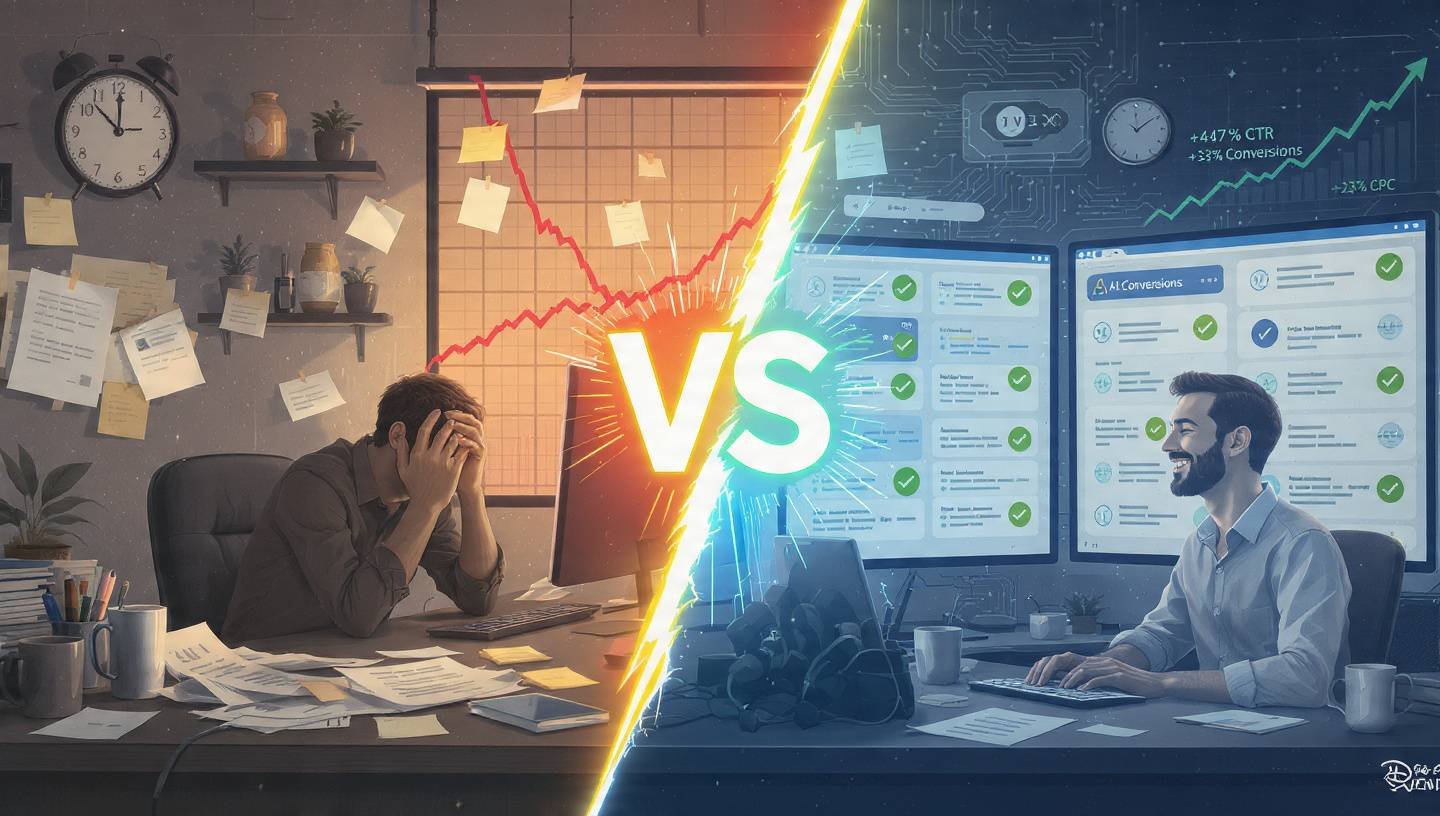
AI-powered ad copywriting transforms how marketers create Google Responsive Search Ads by automating headline generation, testing variations, and optimizing performance through machine learning algorithms. Businesses face mounting pressure to produce compelling ad copy that resonates with diverse audiences while adhering to Google’s character limits and best practices. Traditional methods consume hours of manual effort, yet AI solutions now generate dozens of ad variations in minutes, analyze competitor strategies, and predict which combinations drive conversions.
Google’s Responsive Search Ads allow up to 15 headlines and 4 descriptions, automatically testing combinations to identify top performers. This system requires strategic input rather than guesswork. AI copywriting tools leverage natural language processing to craft messages that align with search intent, incorporate semantic keywords, and maintain brand voice consistency across campaigns.
Understanding Google’s Responsive Search Ad Framework
Responsive Search Ads represent Google’s shift toward automation in paid advertising. The platform tests different headline and description combinations, showing variations based on user queries, device types, and browsing patterns. Advertisers provide multiple assets, and Google’s algorithm determines optimal arrangements.
This format differs from Expanded Text Ads, which displayed fixed headlines and descriptions. RSAs adapt to search contexts, improving relevance scores and ad positions. Google reports that RSAs generate up to 10% more clicks compared to standard text ads when configured properly.
The system evaluates performance through Quality Score, a metric combining expected click-through rate, ad relevance, and landing page experience. Higher scores reduce cost-per-click and improve ad placement. AI tools enhance these metrics by generating copy aligned with search queries and user intent signals.
Character limits constrain creativity: headlines cap at 30 characters, descriptions at 90. These restrictions demand precision. Every word must contribute to the message without filler or redundancy. AI copywriters excel at condensing complex value propositions into compact phrases that capture attention and drive action.
Core Benefits of AI Copywriting for Paid Search
AI copywriting platforms analyze thousands of successful ads to identify patterns in language, structure, and emotional triggers. These systems learn which phrases generate engagement across industries and audience segments. The technology applies these insights to create ad copy tailored to specific campaigns.
Speed ranks among the primary advantages. Manual copywriting for 15 headlines and 4 descriptions takes considerable time, particularly when creating multiple ad groups. AI tools produce complete ad sets within seconds, allowing marketers to launch campaigns faster and test more variations.
Consistency across campaigns improves when using AI systems. The technology maintains brand voice guidelines, terminology preferences, and messaging hierarchies. This uniformity strengthens brand recognition and prevents conflicting messages across different ad groups or platforms.
Data-driven optimization separates AI tools from human intuition. These platforms connect to advertising accounts, monitoring performance metrics in real-time. When certain headlines underperform, the AI suggests replacements based on successful patterns from similar campaigns. This continuous improvement cycle enhances return on ad spend without constant manual intervention.
A/B testing becomes more sophisticated with AI assistance. Rather than comparing two or three variations, marketers can test dozens simultaneously. The AI identifies winning elements—specific words, phrases, or structural approaches—and incorporates them into future iterations.
Leading AI Copywriting Tools for Google Ads
Copy.ai specializes in marketing copy across multiple formats, including Google Ads. The platform offers templates specifically designed for Responsive Search Ads, generating headlines and descriptions that match campaign goals. Users input product details, target audiences, and key benefits; the AI produces variations emphasizing different value propositions.
The tool integrates with Google Ads Editor, streamlining the workflow from generation to implementation. Copy.ai’s algorithms analyze successful ads in similar industries, applying proven formulas to new campaigns. The platform supports over 25 languages, enabling global campaigns with localized messaging.
Jasper AI provides advanced customization through its Boss Mode feature. Marketers define brand voice parameters, competitor positioning, and unique selling points. The AI generates ad copy reflecting these specifications while maintaining Google’s best practices for RSAs.
Jasper’s Chrome extension allows in-platform copywriting, eliminating the need to switch between applications. The tool suggests improvements to existing ads, highlighting weak headlines or descriptions that may drag down performance. Integration with SEMrush and Surfer SEO adds competitive intelligence to the copywriting process.
Writesonic focuses on conversion-oriented copy, training its models on high-performing e-commerce and lead generation campaigns. The platform’s Ad Copy Generator produces multiple variations emphasizing different pain points, benefits, or call-to-action approaches.
Writesonic includes a Quality Score predictor that estimates how Google might rate generated headlines and descriptions. This feature helps marketers prioritize the strongest options before launching campaigns. The tool also generates landing page copy, ensuring message consistency from ad to conversion page.
Phrasee takes a different approach by focusing on email and display advertising language patterns. The platform applies these insights to search ads, creating copy that resonates emotionally while maintaining professional tone. Phrasee’s AI learns brand-specific language preferences through initial training, then generates copy matching established patterns.
The system includes sentiment analysis, flagging copy that might trigger negative associations or fail to convey intended emotions. This capability prevents tone-deaf messaging that could damage brand perception despite generating clicks.
AdCreative.ai combines copywriting with visual ad generation, though its text capabilities rival specialized tools. The platform analyzes competitor ads, identifying gaps in messaging or opportunities to differentiate. Generated copy emphasizes unique value propositions rather than generic benefits.
AdCreative.ai’s scoring system ranks headlines and descriptions by predicted performance, based on historical data from similar campaigns. This prioritization helps marketers select the strongest options when Google Ads limits headline pins or requires specific messaging in certain positions.
Implementation Strategies for AI-Generated Ad Copy
Successful integration of AI copywriting requires structured workflows rather than simply generating and uploading ads. Start by defining campaign objectives, target audiences, and key performance indicators. These parameters guide the AI toward relevant copy styles and messaging angles.
Create seed content providing the AI with essential information: product features, competitive advantages, customer pain points, and desired outcomes. Quality input directly affects output relevance. Generic prompts produce generic copy; detailed briefs generate targeted messaging.
Generate multiple sets of headlines and descriptions, even beyond Google’s 15/4 limits. Review all options, selecting the strongest variations that cover different angles. Include headlines focusing on benefits, features, pricing, urgency, and social proof. This diversity helps Google’s algorithm match ads to various search intents.
Pin strategic headlines to specific positions when necessary. Position 1 headlines appear most frequently, making them ideal for brand names or primary value propositions. However, excessive pinning limits Google’s testing flexibility, potentially reducing performance. Use pins sparingly, only when specific messaging must appear in certain contexts.
Test AI-generated copy against human-written alternatives initially. This comparison reveals whether the AI produces competitive results for specific industries or audiences. Some verticals, particularly those requiring technical accuracy or emotional nuance, may still benefit from human oversight or editing.
Monitor performance metrics weekly during the first month after launching AI-generated ads. Watch for headlines or descriptions with low impression shares, indicating Google rarely selects them. Replace underperforming assets with new AI-generated options, creating an iterative improvement cycle.
Optimizing AI Copy for Quality Score and Relevance
Quality Score improvements begin with keyword alignment. AI tools should incorporate primary and semantic keywords naturally within headlines and descriptions. Forced keyword stuffing damages readability and user experience, reducing click-through rates despite keyword presence.
Search intent matching elevates ad relevance. Analyze the queries triggering ads, ensuring copy addresses user needs at their specific journey stage. Informational queries require educational copy, while transactional searches demand action-oriented messaging with clear calls-to-action.
Landing page alignment strengthens Quality Score’s third component. The Website and Page Speed Test reveals technical issues affecting user experience after clicks. Slow-loading pages increase bounce rates, damaging Quality Score regardless of ad copy quality.
Dynamic keyword insertion enhances relevance by automatically including search terms within ad copy. However, this feature requires careful setup to prevent awkward phrasing or grammatical errors. Test dynamic insertion with AI-generated templates designed to accommodate variable keywords naturally.
Negative keywords prevent ads from appearing on irrelevant searches, improving click-through rates by focusing budgets on qualified traffic. Regular review of search term reports identifies new negative keywords, preventing wasted spend on mismatched queries.
Ad extensions complement copy by providing additional information and increasing ad real estate. Sitelink, callout, and structured snippet extensions offer opportunities to reinforce messages or address objections not covered in headlines and descriptions. AI tools can generate extension copy alongside primary ad assets.
Leveraging Semantic SEO Principles in Ad Copy
Semantic optimization extends beyond organic search, applying equally to paid advertising. AI copywriting tools trained on semantic principles generate ads that align with Google’s understanding of query intent and topic relationships.
Topic clusters inform ad group structure and copy themes. Rather than isolated keywords, organize campaigns around broader topics with related subtopics. This approach mirrors how users search and how Google interprets content relevance. For comprehensive guidance on this approach, explore The Ultimate Guide to Keyword Research for SEO Success.
Entity recognition helps AI tools identify brands, products, locations, and concepts within prompts, generating copy that leverages these relationships. Mentioning recognized entities can improve ad relevance for searches involving those terms, even without exact keyword matches.
Natural language patterns make ads more conversational and engaging. AI trained on real user communications produces copy that feels human-written rather than algorithmically generated. This authenticity improves click-through rates as users perceive ads as helpful rather than promotional.
Latent Semantic Indexing (LSI) keywords supplement primary terms, signaling topical depth to Google’s algorithms. AI copywriting platforms automatically incorporate LSI variations, creating semantically rich ads without manual research. This technique particularly benefits competitive keywords where slight relevance improvements affect rankings.
Competitive Analysis Through AI Tools
Understanding competitor messaging reveals opportunities for differentiation. AI-powered competitive analysis tools scrape and analyze ads from similar businesses, identifying common themes, pricing strategies, and promotional offers.
Competition Checker tools provide insights into rival ad strategies, though manual review of Google search results remains valuable. Search for your primary keywords, noting which competitors appear, their messaging angles, and calls-to-action.
Identify gaps in competitor copy where your business holds advantages. If competitors emphasize price but ignore service quality, AI-generated copy highlighting superior support or expertise differentiates your ads. This positioning attracts users prioritizing value over cost.
Monitor competitor landing pages alongside their ads. The disconnect between ad promises and landing page content reveals opportunities to provide better user experiences. If competitor ads promise benefits their pages don’t deliver, your aligned messaging and landing pages will outperform them.
Seasonal and promotional copy patterns emerge through ongoing competitor monitoring. Track how rivals adjust messaging during peak seasons, holidays, or industry events. AI tools can generate seasonal variations matching these patterns while maintaining unique positioning.
Measuring Success and ROI of AI Copywriting
Performance measurement begins with baseline metrics before implementing AI tools. Document current click-through rates, conversion rates, cost-per-conversion, and Quality Scores across campaigns. These benchmarks reveal AI’s impact on campaign performance.
A/B testing isolates AI copy performance from other variables. Create identical campaigns with human-written and AI-generated ads, allocating equal budgets and targeting identical audiences. Run tests for sufficient duration—typically 30 days minimum—to gather statistically significant data.
Cost savings extend beyond improved conversion rates. Calculate time spent on manual copywriting versus AI-assisted workflows. If AI reduces copywriting time by 75%, that efficiency gain enables marketers to manage more campaigns or focus on strategic planning rather than execution.
Incremental improvements compound over time. A 0.5% increase in click-through rate might seem modest initially, but across thousands of impressions monthly, this translates to significant additional traffic. Combined with Quality Score improvements reducing costs, the financial impact grows substantially.
Attribution tracking reveals how AI-generated ads contribute to overall business goals beyond immediate conversions. Users clicking ads may research further before converting, making multi-touch attribution essential for accurate ROI calculation. Google Analytics and CRM integration provides complete customer journey visibility.
Advanced Techniques for AI Ad Optimization
Dynamic ad customization adapts messaging based on user signals like location, device, or previous interactions. AI platforms can generate variations for different segments, creating personalized experiences at scale. Mobile users might see copy emphasizing convenience, while desktop users receive detail-oriented messaging.
Remarketing campaigns benefit from AI-generated sequential messaging. Users who visited product pages but didn’t convert receive different ads than those who abandoned carts. AI creates these progressive narratives, guiding users through consideration stages with appropriate copy for each touchpoint.
Audience targeting refinement improves as AI analyzes which demographics, interests, or behaviors respond to specific copy styles. These insights inform both ad generation and audience selection, creating feedback loops that continuously improve campaign performance.
Multivariate testing powered by AI examines how different elements interact. Rather than testing headlines in isolation, the AI identifies which headline-description combinations perform best together. This approach uncovers synergies that simple A/B testing might miss.
Budget allocation strategies guided by AI copy performance data optimize spending across campaigns. Ads generating strong engagement at lower costs receive increased budgets, while underperforming combinations get paused or replaced. This dynamic allocation maximizes return without manual monitoring.
Common Pitfalls and How to Avoid Them
Over-reliance on AI without human oversight creates generic copy lacking brand personality. Review and edit generated ads, ensuring they reflect your unique voice and market position. AI provides starting points, not finished products requiring zero revision.
Ignoring negative feedback loops damages long-term performance. If certain AI-generated phrases consistently underperform, add them to exclusion lists within your copywriting tools. This training improves future outputs by eliminating known weak patterns.
Character limit violations occur when AI tools generate headlines or descriptions exceeding Google’s maximums. Always verify character counts before uploading ads. Many AI platforms include character counters, but manual verification prevents rejected ads and delayed launches.
Brand safety concerns arise when AI generates inappropriate copy or makes unsubstantiated claims. Implement approval workflows requiring human review before ads go live. This gate catches potential issues while maintaining AI efficiency for initial generation.
Compliance with advertising regulations demands attention regardless of generation method. AI may inadvertently produce copy violating industry-specific rules around medical claims, financial advice, or legal services. Familiarize AI tools with your industry’s constraints through custom guidelines and review processes.
Integrating AI Copywriting with Broader SEO Strategy
Paid advertising and organic search complement each other when messaging aligns across channels. AI-generated ad copy should reflect themes from your content marketing, creating cohesive brand experiences whether users arrive via ads or organic listings.
Keyword research informs both SEO and PPC strategies. Tools like Keyword Research Tool identify high-value terms to target through multiple channels. AI copywriting leverages this research, generating ads that capture traffic organic rankings haven’t yet achieved.
Landing page optimization connects paid traffic to conversion outcomes. The principles covered in On-Page SEO Best Practices for Optimizing Your Content apply equally to pages receiving ad traffic. Consistent messaging from ad to landing page improves Quality Score and conversion rates simultaneously.
Technical SEO foundations support paid campaigns indirectly. The Mobile Support Test ensures your site performs well for users clicking mobile ads, where the majority of paid traffic originates. Technical issues that frustrate users damage both organic and paid performance.
Content marketing assets provide material for ad copy angles. Blog posts, case studies, and customer testimonials offer proof points and messaging ideas. AI tools can analyze this content, extracting key themes and statistics to incorporate into ad copy.
Future Trends in AI Ad Copywriting
Voice search optimization will influence ad copy as more users conduct searches through voice assistants. AI tools will adapt to conversational query patterns, generating natural language ads matching how people speak rather than type.
Multimodal AI combining text, image, and video generation will create complete ad experiences. Rather than just generating headlines, these systems will produce visual assets and copy simultaneously, ensuring alignment across all creative elements.
Real-time bidding integration with AI copywriting will enable dynamic ad generation responding to market conditions. If a competitor raises prices, AI could automatically generate ads highlighting your cost advantage. This responsiveness requires sophisticated automation beyond current capabilities but represents the technology’s trajectory.
Predictive analytics will forecast ad performance before campaigns launch. AI models trained on historical data will estimate click-through rates, conversion rates, and ROI for generated copy, helping marketers prioritize the strongest options before spending budget on testing.
Privacy-focused advertising in response to cookie deprecation will increase AI’s value. As targeting capabilities narrow, superior ad copy becomes more critical for capturing attention and conversions. AI tools will help marketers compensate for reduced targeting precision through messaging optimization.
Comparing Top AI Copywriting Platforms
Copy.ai excels in template variety and ease of use, making it suitable for marketers new to AI tools. The platform’s learning curve is gentle, with intuitive interfaces guiding users through ad generation. However, it lacks deep customization options found in enterprise-focused alternatives.
Jasper AI provides the most extensive customization and brand voice training. Larger organizations with established style guides benefit from Jasper’s ability to learn and replicate specific writing patterns. The platform’s higher price point reflects these advanced capabilities.
Writesonic balances affordability with functionality, offering strong performance for small to mid-sized businesses. Its focus on conversion optimization makes it particularly effective for e-commerce campaigns where direct response matters most.
Phrasee stands out for enterprise users requiring multi-channel consistency. The platform’s email marketing heritage brings sophistication to emotional messaging across all formats. Organizations running integrated campaigns across paid, owned, and earned channels find particular value in Phrasee’s approach.
AdCreative.ai serves businesses prioritizing competitor analysis and differentiation. The platform’s competitive intelligence features exceed alternatives, making it valuable for crowded markets where subtle positioning differences determine success.
Building Sustainable AI Ad Workflows
Document AI usage guidelines for team consistency. Establish which tools to use for different campaign types, preferred prompt structures, and review processes before ads go live. This documentation prevents workflow fragmentation as teams scale.
Training programs ensure all team members understand AI capabilities and limitations. Marketers who grasp how these tools work make better prompting decisions and recognize when human intervention improves outputs. Regular training updates keep teams current with new features and best practices.
Version control for ad copy prevents confusion about which variations are active or tested. Use naming conventions that indicate generation date, AI tool used, and campaign purpose. This organization simplifies performance analysis and knowledge transfer.
Feedback loops capture learnings from AI experiments. When certain prompts generate exceptional results, document what made them effective. When outputs disappoint, note what went wrong. This institutional knowledge improves prompt engineering over time.
Integration with project management tools streamlines campaign launches. Connecting AI copywriting platforms with tools like Asana or Monday.com ensures generated ads move smoothly through approval and implementation stages without bottlenecks or lost work.
Ethical Considerations in AI-Generated Advertising
Transparency about AI usage remains debated. While consumers don’t need to know the specific tools behind ads, misleading claims or false promises generated by AI carry ethical implications regardless of creation method. Human oversight ensures accuracy and truthfulness.
Data privacy concerns arise when AI tools access customer information for personalization. Verify that chosen platforms comply with GDPR, CCPA, and other privacy regulations. Customer data should never train AI models without explicit consent and proper anonymization.
Bias in AI-generated copy reflects training data biases. If training sets overrepresent certain demographics or perspectives, generated ads may inadvertently exclude or offend others. Regular audits of AI outputs help identify and correct these issues before they reach audiences.
Job displacement fears accompany any automation technology. AI copywriting augments rather than replaces human marketers, handling repetitive tasks while humans focus on strategy, creativity, and relationship building. Position AI as a tool empowering teams rather than threatening jobs.
Environmental impact of AI computing resources deserves consideration. Training large language models requires significant energy consumption. Choose providers demonstrating commitment to sustainable computing practices and carbon offset programs.
Creating Effective Prompts for Ad Copy Generation
Specific prompts yield better results than vague requests. Instead of “write Google ads for my product,” provide product name, target audience, key benefits, competitive advantages, and desired tone. This specificity guides AI toward relevant outputs requiring minimal editing.
Examples of successful ads inform AI about preferred styles. Include 2-3 high-performing headlines and descriptions in your prompt, instructing the AI to create variations matching these patterns. This approach leverages past successes while generating fresh content.
Constraint parameters prevent AI from generating impractical copy. Specify exact character limits, required keyword inclusion, and any words or phrases to avoid. These guardrails ensure outputs meet Google’s technical requirements and brand guidelines.
Iteration instructions improve outputs through multi-step generation. Rather than generating 15 final headlines at once, prompt the AI to create 30 draft headlines, then refine the strongest 15. This two-phase approach combines quantity with quality.
Context about campaign goals shapes appropriate messaging. Ads for awareness campaigns differ from those driving immediate conversions. Specify whether the goal is traffic, leads, sales, or brand recognition, allowing AI to adapt copy accordingly.
Troubleshooting Common AI Copywriting Issues
Generic copy lacking differentiation often results from insufficient input. Provide more details about what makes your offering unique. Include competitor analysis in prompts, explicitly requesting copy that differentiates from rival approaches.
Grammatical errors or awkward phrasing occasionally appear in AI outputs. Grammar checking tools like Grammarly or Hemingway Editor catch these issues during review. Most AI platforms improve over time as their models update, reducing error frequency.
Off-brand tone occurs when AI doesn’t understand your voice. Create comprehensive brand voice documentation including example phrases, preferred vocabulary, and tone descriptors. Reference this document in prompts or use platforms allowing brand voice training.
Repetitive suggestions emerge when prompting the same AI multiple times without variation. Change prompt structures, provide different examples, or use alternative tools to generate fresh perspectives. Variety in inputs produces variety in outputs.
Factual inaccuracies require vigilance, particularly for technical products or regulated industries. AI may confidently generate incorrect specifications or claims. Human review for accuracy remains non-negotiable, especially for ads making specific product claims.
Maximizing ROI Through Continuous Optimization
Performance analysis identifies which AI-generated elements drive results. Use Google Ads asset reporting to see individual headline and description performance. This data informs future AI prompts, emphasizing what works and eliminating what doesn’t.
Seasonal adjustments keep campaigns fresh and relevant. Holiday periods, industry events, and market changes require updated messaging. Schedule quarterly AI copywriting sessions to generate seasonal variations ahead of peak periods.
Competitive monitoring reveals when rivals shift strategies, requiring your response. Monthly searches for primary keywords show competitor ad evolution. Use these insights to prompt AI for counter-positioning or improved messaging.
Audience expansion strategies benefit from AI’s ability to quickly generate variations for new segments. When entering new markets or targeting different demographics, AI produces tailored copy without starting from scratch.
Budget reallocation based on AI performance maximizes efficiency. Campaigns using AI-generated copy that outperform traditional methods deserve increased investment. This data-driven approach to budget distribution improves overall account performance.
Tools and Resources for Enhanced Ad Performance
Beyond copywriting, comprehensive SEO tools support paid campaign success. The Website Developer Tools collection from Small SEO Studio provides essential capabilities for optimizing the technical foundation supporting your ads.
Understanding search engine result page dynamics improves ad positioning strategy. The Google SERP Tool reveals how organic and paid results interact, informing decisions about when to bid aggressively versus relying on organic visibility.
Backlink analysis connects to paid advertising through landing page authority. Tools like High Quality Backlinks Checker reveal which pages have strong domain authority, making them ideal landing destinations for high-value campaigns.